Lebanon: one in five children goes to bed hungry, says UNICEF
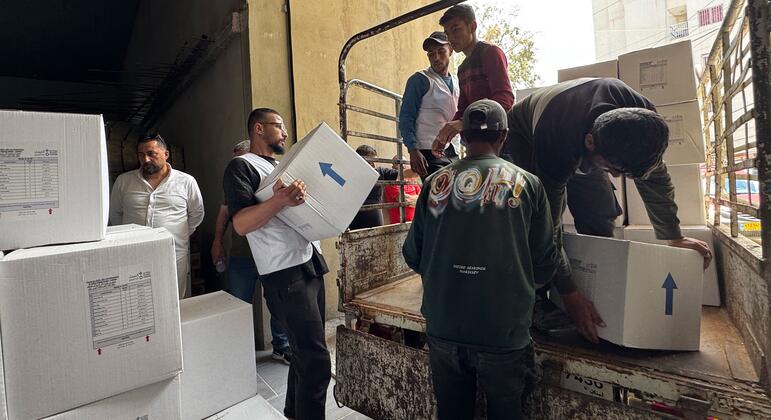 Four in five households in Lebanon struggle to afford basic necessities today, with children increasingly going hungry, missing school and being pushed into work as conflict compounds years of economic crisis.
In an alert on Wednesday, the UN Children’s Fund (UNICEF) said that children go to bed hungry in at least one in five households.
“Children and young people in Lebanon are being asked to bear a burden no child should have to carry,” said UNICEF Lebanon Representative Marcoluigi Corsi, highlighting the “profound psychological distress” that they experience.
“Without urgent and sustained action, these pressures are shaping their lives for years to come,” he stressed.
It is nearly six months since a ceasefire agreement between Lebanon and Israel seeking to end hostilities between Lebanon-based Hezbollah fighters and the Israeli military, linked to the U.S.-Iran war.
Deadly violence
In its latest update from 23 September, the UN aid coordination office, OCHA, reported continuing “air strikes, shelling, demolitions and military activity” across south Lebanon, with restricted humanitarian access and unviable conditions for safe and sustainable returns.
According to UNICEF’s latest report, An Enduring Nightmare, around one in three families surveyed said that their children had missed necessary healthcare, mainly because they could not afford it.
Fourteen per cent said at least one child was working, more than twice the proportion recorded in January 2025.
The conflict has also exacted a devastating human toll. Since 2 March 2026, at least 261 children have been killed and 1,056 injured, an average of seven children killed or injured every day over six months. An estimated 12 per cent of injured children are now living with a disability.
Education has been severely disrupted, UNICEF noted, with 436 schools damaged or destroyed, putting around 100,000 children at risk of losing access to a classroom. A further 86 teachers have been killed or injured.
No money for education
Financial pressures are also forcing families to cut education spending, with 46 per cent reporting reduced expenditure and 17 per cent saying their children had stopped attending school. Among those still in education, 29 per cent were unable to learn as expected, often because of difficulties concentrating and emotional distress.
The psychological impact of the crisis is equally alarming. An estimated 770,000 children have experienced psychological distress over the past six months. More than half of households reported a deterioration in their children’s emotional well-being, while 63 per cent said their children were anxious or nervous.
Young people are also facing diminishing prospects. An earlier UNICEF assessment this year found that only 22 per cent of those aged 18 to 25 were attending school or university, largely because of financial barriers. At the time of the survey, 67 per cent were unemployed.
UNICEF has stepped up its humanitarian response since January 2026, treating injured children, delivering supplies to shelters and medical facilities, and supporting displaced families. The agency is also working to sustain the national systems and services on which children depend.
“Without urgent and sustained action, an entire generation of children and young people risks carrying the scars of this crisis into adulthood,” said Mr. Corsi.
“Lebanon’s recovery depends on protecting children now and upholding their right to health care, education, protection and the opportunities they need to build their futures.”