

World News in Brief: West African migrant crossings, Argentina takes UK to maritime tribunal, farming in Gaza, mental health update
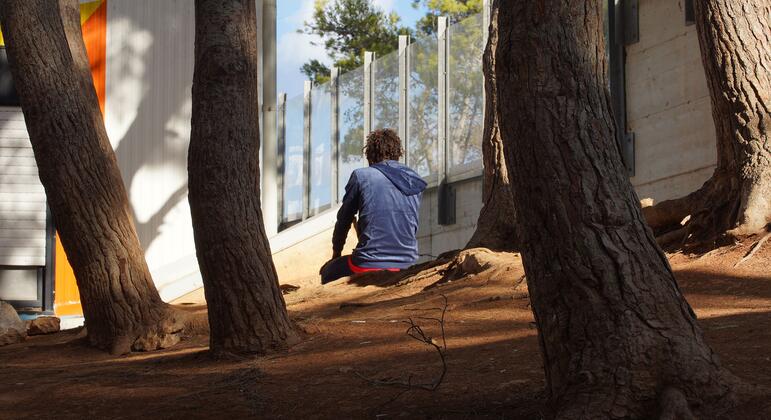 Fewer people from West Africa are reaching Europe by sea, but the journey has not become safer, the UN migration agency (IOM) said on Tuesday.
Arrivals from Mali, Senegal, Guinea and The Gambia fell by 59 per cent in the first half of 2026 compared with the same period last year, to 4,566 people.
Tweet URL
But the drivers of migration persist. West Africans made up a growing share of arrivals on the Mediterranean routes, accounting for 21.9 per cent on the Western route, up from 15.6 per cent, pointing to a shifting landscape.
Longer journeys, same dangers
On the Atlantic route to the Canary Islands, arrivals fell 62 per cent between 2024 and 2025, yet recorded deaths and disappearances barely changed – 1,172 compared with 1,215.
Tighter controls in Morocco, Mauritania and Senegal are pushing departures south, adding up to 750 kilometres to crossings of around 2,200 km.
“No single country can solve this alone,” said IOM Director General Amy Pope. “We need to protect migrants wherever they are.”
Argentina asks maritime tribunal to halt Falklands oil project
Argentina has asked the International Tribunal for the Law of the Sea (ITLOS) to order the United Kingdom to halt an offshore oil project near the Falkland Islands (Malvinas), the Hamburg-based court said on Tuesday.
Buenos Aires wants the Sea Lion development in the North Malvinas Basin stopped while an arbitration case launched by Argentina on 28 September is under way.
It also wants London to refrain from steps that could aggravate the dispute, such as granting new permits.
A hearing date will be announced shortly.
Long-running dispute
The UN lists the Falkland Islands (Malvinas) as a non-self-governing territory and has long urged both sides to negotiate.
Britain has administered them since 1833; Argentina claims sovereignty and the two countries went to war over the islands in 1982. Buenos Aires seeks to resume bilateral negotiations over the islands.
London says the islanders have the right to determine their own future and no discussion over sovereignty can occur without their consent.
Tensions have risen in recent weeks, after President Javier Milei gave London a two-week ultimatum over the project, announcing tougher measures against any companies involved in oil and gas exploration around the islands.
Gaza: increasing dangers confronting war-torn enclave’s farmers
Farmers in Gaza are facing increasing risks as they try to return to their fields.
In an update on Tuesday, the UN Food and Agriculture Organization (FAO), warned that the so-called Yellow Line of demarcation controlled by the Israeli military continues to expand into western Gaza.
This has increasingly limited access to agricultural land and prevented farmers from planting new crops.
‘Farming is my life’
FAO highlighted the case of 39-year-old grower Maryam, who described her small vegetable farm as a “lifeline” for her family of eight in southern Gaza.
Maryam is one of 1,700 farmers supported by FAO to purchase seeds, water and the other inputs they need to grow crops. The agency also helps herders and fishing families in Gaza
In her first season, Maryam harvested approximately three tonnes of okra.
“Farming is my life and my family’s life. It is the income source I depend on. Being able to farm again means that I am alive and that I can live with dignity with my family,” she told FAO.
WHO supports call for mental health care in the community
There’s a new call from the UN World Health Organization (WHO) to reform mental health services by developing community-based models.
Tweet URL
According to WHO, about half of all those living in psychiatric hospitals and other institutions around the world had no choice when they were admitted.
This is despite the fact that people living with mental health conditions “can flourish in their communities when given the right support”, the agency insisted.
Mark van Ommeren, Head of WHO’s Mental Health and Substance Use Unit, said large numbers in need of services “are forced to live beyond closed doors. About half were brought in against their will, stripped of basic daily choices like what to wear, when to eat and cut off from the outside world.”
Pioneering Sri Lanka
Who said on Tuesday that many countries still rely heavily on psychiatric institutions and that across the world, nearly half of all public mental health funding is spent on maintaining them.
This leaves millions of people unable to get the care they need in general hospitals or in the community.
The WHO applauded Sri Lanka for replacing its isolated mental health institutions with community-based services.
Today, the country delivers care through inpatient and outpatient units in hospitals, clinics and rehabilitation units.
“When care is characterized by coercion, rigid control, or social isolation, it risks becoming a form of confinement rather than care,” WHO stressed.