Countries far from conflict paying the price for wars not their own, India tells UN
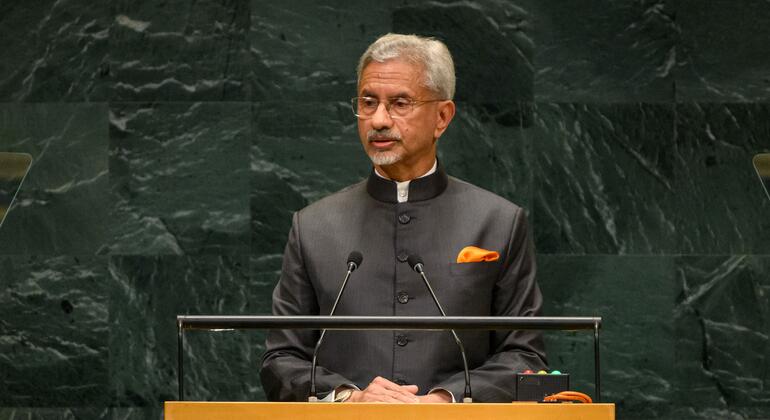 India’s External Affairs Minister Subrahmanyam Jaishankar warned on Saturday that violent conflicts continue to undermine international peace and security, while countries far removed from the battlefield are being forced to pay a heavy price.
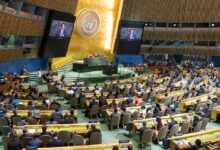
Addressing the high-level debate of the 81st session of the UN General Assembly, he said the inability to maintain peace was “not only weakening security, but is also threatening progress, slowing the pace of development in a globalized world.”
Countries distant from conflicts were also paying the price despite bearing no responsibility for them, he added.
Gulf tensions
Mr. Jaishankar expressed deep concern over continuing conflicts in the Gulf region and the targeting of commercial vessels and maritime crews in international waterways, describing such actions as unacceptable.
On tensions and conflicts in West Asia and the Middle East, he said a two-State solution was necessary for lasting peace, while calling for restraint, de-escalation, protection of civilians and the uninterrupted flow of energy and commerce.
The war in Ukraine was equally concerning as it entered its fifth year, he said.
Echoing Prime Minister Narendra Modi, Mr. Jaishankar said the focus must shift from “an endless war” to “ending the war”, adding that India supported initiatives aimed at achieving peace.
‘Everything is being weaponized’
Mr. Jaishankar warned that a world continually subjected to threats and pressure was living “on the brink of the abyss”, underlining the need for stability, security and predictability.
After eight decades of the UN, this should have become the prevailing trend, he said. Instead, “we are witnessing circumstances in which everything is being weaponized.”
From finance and market access to supply chains and technology, a mindset of “hyper-competition” was taking hold, he said, with institutions weakening and countries increasingly focusing on de-risking and diversification.
The resulting crises involving food, fuel, fertilizers and financing had made conditions particularly challenging for the Global South, he added.
‘Scourge’ of terrorism
Mr. Jaishankar described terrorism as a persistent threat to peace and said State-sponsored, cross-border terrorism represented “a direct affront to the global order”.
Governments involved must be held accountable, he said, insisting there could be no weakening of “zero tolerance” towards terrorism.
Referring to remarks made during Friday’s session of the General Debate, he accused “a serial practitioner of terrorism” of misrepresenting facts and seeking to normalize terrorism.
“It is for the perpetrator of terrorism to mend its ways,” he said.
Development and a multipolar world
Turning to India’s development, Mr. Jaishankar said the country’s progress had advanced the prospects of one-sixth of humanity, highlighting the role of digital public infrastructure in governance and delivery of socioeconomic benefits.
He said India had also supported 600 development projects in 78 countries, spanning clean energy, infrastructure, sustainable agriculture and information technology.
The world was moving towards multipolarity, he added, and the international order established in 1945 was confronting new realities.
Adjustment to that changing world “will not be easy”, he cautioned, arguing that civilized dialogue was essential and that a large part of humanity could not be excluded.
He closed by invoking the words inscribed on Mahatma Gandhi’s statue at the UN:
“There is no path to peace. Peace is the path.”